
Turn-Mill Composite Machining for Precision Non-Standard Parts
In today’s precision manufacturing landscape, traditional standalone turning or milling processes are no longer sufficient to meet the stringent requirements of medical, aerospace, new energy, and microelectronics industries. These sectors demand parts with complex geometries, ultra-tight tolerances, and exceptional consistency—challenges that conventional multi-machine workflows often fail to address.
Turn-mill composite machining has emerged as the game-changing technology that overcomes these limitations. By integrating turning and milling operations in a single setup, this advanced process delivers micron-level accuracy, eliminates cumulative clamping errors, and dramatically reduces production lead times. For businesses seeking reliable, high-quality custom parts, turn-mill composite machining is the new industry benchmark.
What Is Turn-Mill Composite Machining?
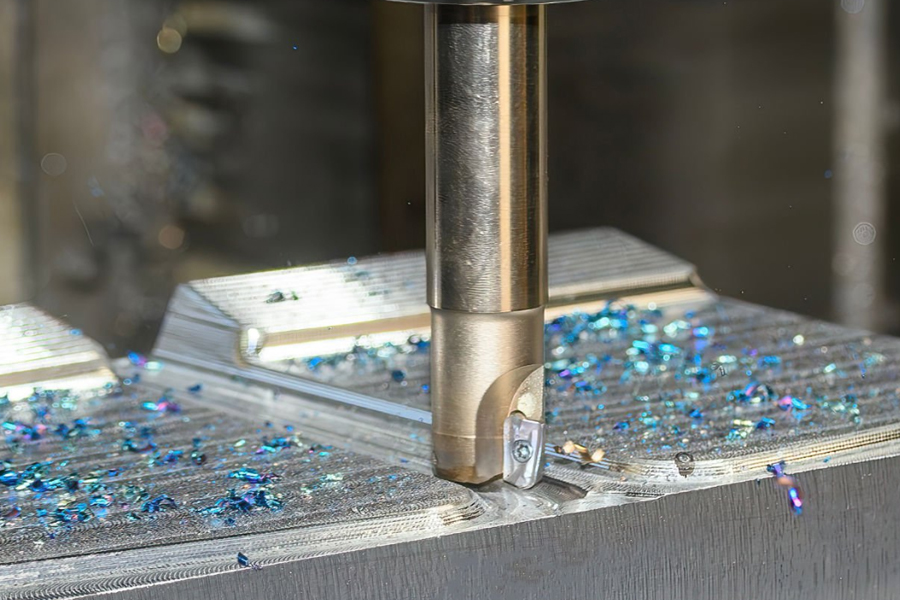
Turn-mill composite machining is a hybrid manufacturing technique that combines rotary turning with multi-axis milling, drilling, tapping, grooving, and contouring—all performed on one machine platform. Unlike traditional methods that require transferring workpieces between separate lathes and mills, turn-mill composite machining completes the entire part in a single clamping cycle.
This integrated approach not only saves time but also ensures unparalleled geometric accuracy. Components that once needed multiple setups and realignments can now be produced seamlessly, with consistent dimensional stability and surface finish.
Top 5 Advantages of Turn-Mill Composite Machining
1. Eliminates Clamping Errors for Superior Accuracy
Every time a workpiece is re-clamped, micro-positioning deviations occur. Over multiple operations, these errors accumulate, often pushing finished parts beyond tolerance limits—especially problematic for high-precision applications.
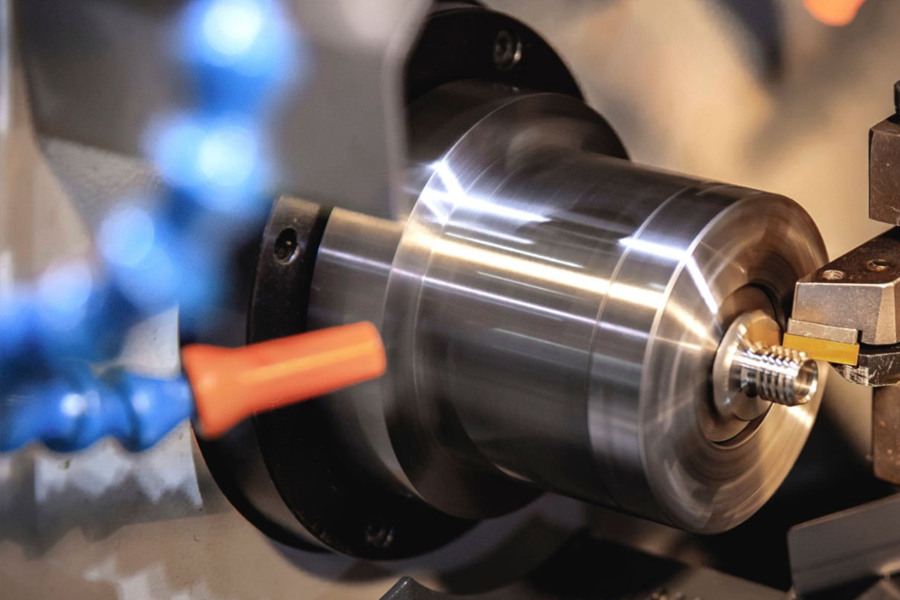
With turn-mill composite machining, the part is clamped once and all operations are performed in sequence. This completely removes re-positioning errors. At Airui Precision, we couple this technology with a rigorous TQM system and ZEISS CMM full inspections, achieving stable ±0.02 mm accuracy—well beyond conventional standards. This reliability makes turn-mill composite machining the go-to choice for mission-critical medical and aerospace components.
2. One-Piece Forming for Enhanced Structural Integrity
Many non-standard parts feature both rotational bodies and irregular surfaces, slots, or undercuts. Traditional separate machining followed by assembly introduces seams, stress risers, and potential loosening over time.
Turn-mill composite machining creates these features in one solid piece—no joints, no secondary assembly stresses. The result is a part with homogeneous material density and superior strength, perfectly suited for high-speed rotation, high-pressure environments, and precision assemblies where failure is not an option.
3. Faster Turnaround Times and Cost Efficiency
Conventional workflows involve multiple machine transfers, queue waits, and repeated inspections—all of which extend lead times and inflate costs.
By consolidating operations, turn-mill composite machining slashes production cycles by over 30%. Integrated with MES+ERP digital management and lean production principles, Airui Precision further reduces manufacturing costs by up to 30%. We support flexible order quantities—from single prototypes to large-volume production—with a monthly capacity of 150+ projects, serving customers in more than 30 countries.
4. Versatility for Complex Geometries
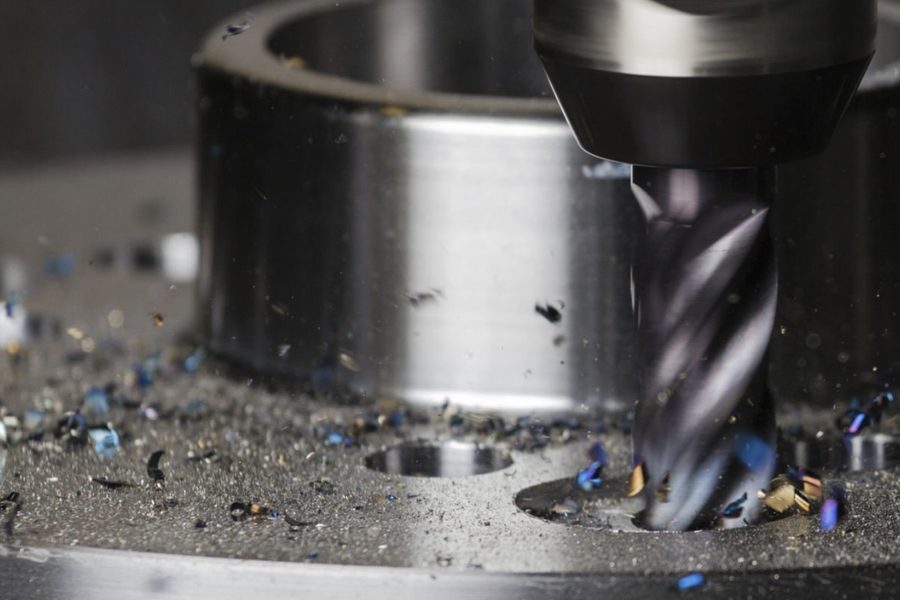
Standard lathes struggle with non-cylindrical features, while milling machines find it difficult to handle long shafts or rotational parts. Turn-mill composite machining bridges this gap, effortlessly handling irregular curves, eccentric structures, multi-position holes, and intricate grooves—all in one setup. This versatility makes it the ideal solution for parts that were previously impossible or prohibitively expensive to manufacture.
5. Consistent Quality Across High-Volume Production
Non-standard parts often suffer from batch-to-batch variation when produced on conventional equipment. Through standardized process controls, mistake-proofing, and end-to-end quality monitoring, turn-mill composite machining delivers defect rates below 0.3% even in mass production. This ensures that every part—whether the first or the thousandth—meets the same exacting specifications, giving manufacturers the confidence to scale up without compromising quality.
Key Industries and Applications
Turn-mill composite machining is particularly well-suited for high-precision, complex, and demanding non-standard parts across multiple sectors:
- Medical Devices – Surgical instrument cores, diagnostic shaft components, miniature connectors, and fluid control parts. ISO 13485 certified, with burr-free surfaces and micron-level tolerances.
- Aerospace – Titanium and aluminum structural components, hydraulic valve parts, thin-walled casings, and curved fittings. ASME certified, ensuring high strength and deformation-free machining.
- New Energy – Precision parts for energy storage, photovoltaic, and lithium-battery equipment, including cooling system fittings, automation shafts, and sealing assemblies.
- Microelectronics & 5G – Miniature shafts, precision sleeves, and high-frequency communication components with ±0.02 mm accuracy and mirror-like finishes.
- Industrial Automation – Eccentric wheels, transmission parts, and complex connectors that demand high coaxiality and assembly precision.
- Instruments & Meters – Irregular core parts for optical, audio, and inspection devices, where multiple operations are integrated into one cycle.
Why Choose Airui Precision for Turn-Mill Composite Machining?
With 18 years of experience, Dongguan Airui Precision Machinery Technology Co., Ltd. stands out as a trusted partner for turn-mill composite machining:
- State-of-the-Art Equipment – Over 300 imported machines, including dual-spindle turn-mill centers, 5-axis machining centers, ZEISS CMM, and German spectrometers.
- Comprehensive Certifications – ISO9001, ISO14001, ISO13485, and ASME, meeting the highest industry standards for export and mass production.
- One-Stop Service – From DFM optimization, machining, surface finishing (over 15 processes), assembly, to packaging and logistics—all under one roof.
- Global Reach – Overseas warehouses in Europe, Americas, and Southeast Asia, with independent import/export capabilities.
- Responsive Support – Dedicated engineers, instant quotations for 1–1000 pieces, and rapid turnaround for prototypes and bulk orders.
Conclusion
Turn-mill composite machining is no longer a niche technology—it is the backbone of high-precision, high-complexity, and high-volume manufacturing for the world’s most advanced industries. Its ability to deliver unmatched accuracy, structural integrity, speed, and consistency makes it the preferred choice for custom non-standard parts in medical, aerospace, new energy, and beyond.
Airui Precision combines cutting-edge turn-mill composite machining capabilities with decades of expertise and a customer-centric approach. Whether you need a single prototype or millions of parts, we provide a reliable, cost-effective, and fully integrated solution.