Request A Quick Quote

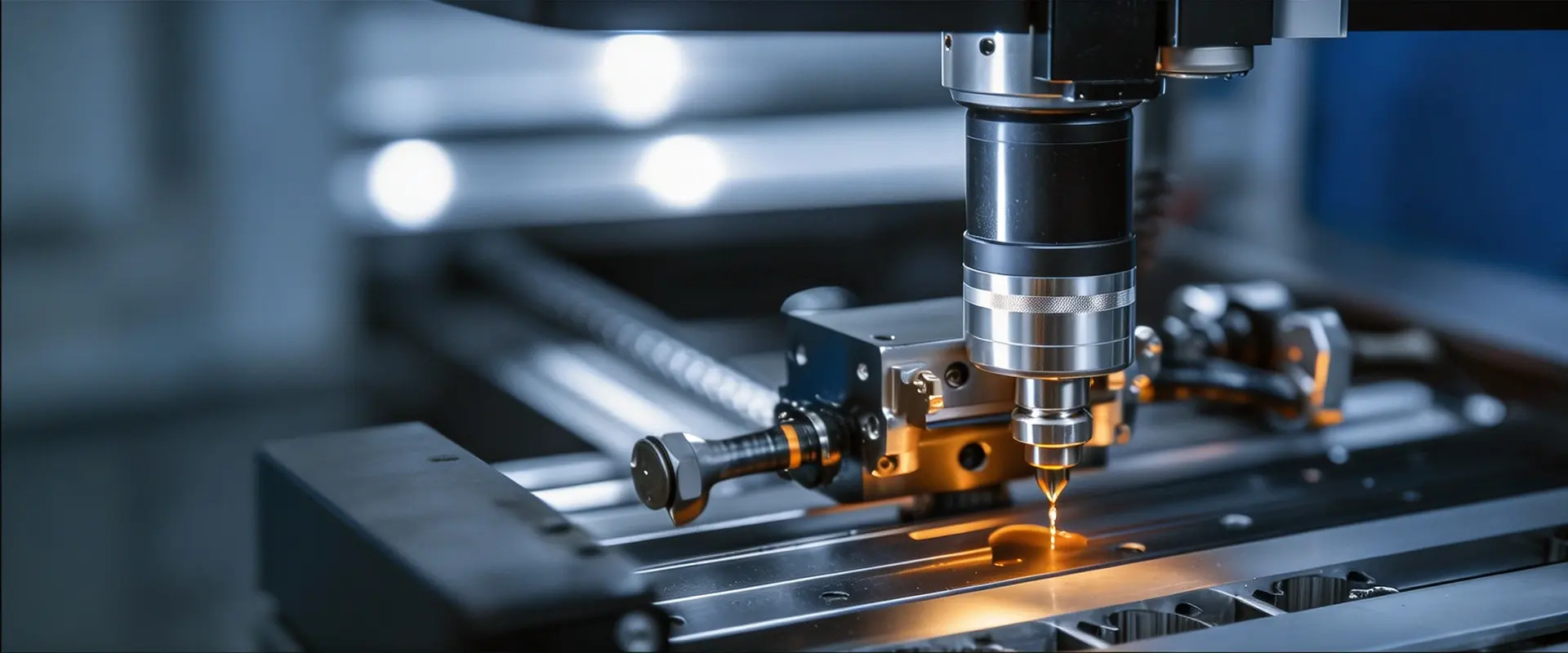
    Precision Grinding & EDM

    Precision Grinding & EDM

    Micron-Level Ultra-High Precision · For High-Hardness Difficult-to-Machine Materials · Complex Cavity & Micro Structure Forming

    Process Overview

    Precision special machining processes to solve high-hardness, high-precision and complex structure machining challenges, achieving ultimate accuracy.

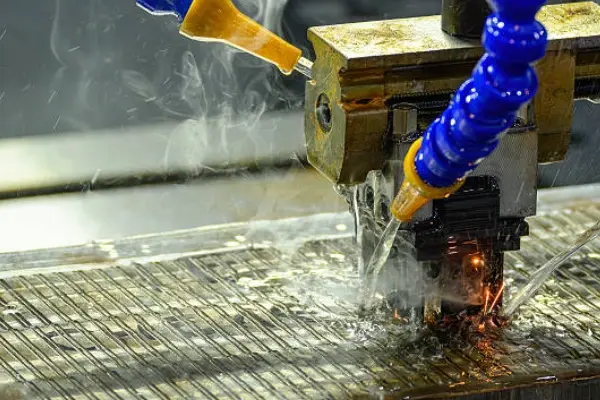
    ARES Precision Malaysia is equipped with a full range of precision grinding machines and electrical discharge machining (EDM) equipment, undertaking special machining requirements such as high-precision grinding, complex cavity EDM and micro structure forming.

    As a final finishing process, precision grinding improves part dimensional accuracy to micron level while achieving extremely low surface roughness; EDM breaks through the material limitations of conventional cutting, processing high-hardness materials such as quenched steel and cemented carbide, as well as complex structures such as deep cavities, narrow slits and special-shaped micro holes.

    Backed by mature process systems and a professional technical team, we stably achieve grinding accuracy of ±0.005mm. Our services are widely used in precision molds, medical devices, aerospace, high-end electronics and other fields, fully compliant with international quality system standards such as ISO 9001 and ISO 13485.
    Precision Grinding & EDM Process

    Machining Parameters

    Covering core indicators of grinding and EDM processes to meet extreme precision and special machining requirements.
    Grinding Accuracy

    Grinding Accuracy

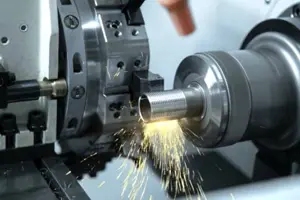
    ⦁ Dimensional tolerance down to ±0.005mm

    ⦁ Roundness up to 0.002mm

    ⦁ Surface roughness up to Ra 0.2μm
    EDM Capability

    EDM Capability

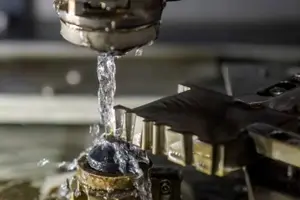
    ⦁ Forming accuracy down to ±0.01mm

    ⦁ Minimum slit width: 0.1mm

    ⦁ Suitable for deep cavity, narrow slit and special-shaped micro hole machining
    Equipment Configuration

    Equipment Configuration

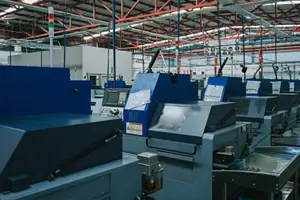
    ⦁ High-precision surface / ID & OD grinding machines

    ⦁ Sinker EDM, slow-feeding wire EDM

    ⦁ Equipped with profiler, roughness tester and other special inspection equipment
    Order Volume Range

    Order Volume Range

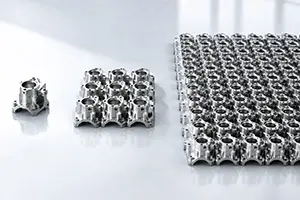
    ⦁ Single-piece precision machining ~ small & medium batch finishing

    Materials & Processes

    Covering both conventional metals and high-hardness, difficult-to-machine materials, with precision post-processing for ultimate performance.

    Compatible Materials

    Compatible Materials

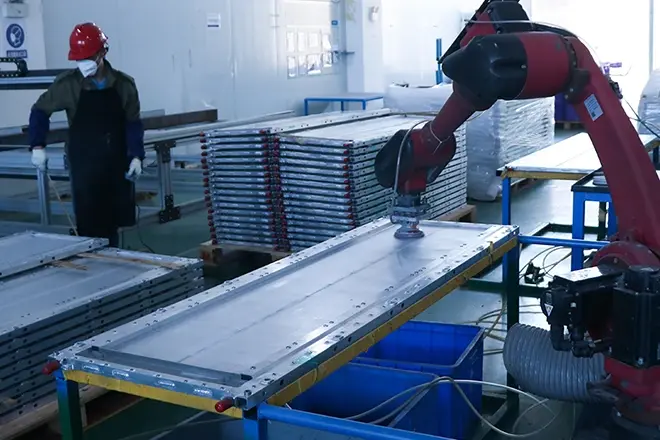
    • High-hardness materials: Hardened steel, cemented carbide, die steel, high-speed steel
    • Conventional metals: Stainless steel, carbon steel, alloy steel, aluminum alloy, copper alloy
    • Specialty materials: Titanium alloy, nickel-based high-temperature alloy, conductive ceramics
    Surface Treatment

    Surface Treatment

    • Mirror polishing, ultra-precision grinding, sandblasting and wire drawing
    • Passivation, hard chrome plating, hard anodizing
    • Vacuum heat treatment, nitriding, carburizing strengthening
    • Blackening, electrophoresis and other anti-corrosion treatments

    Applications

    Focusing on high-precision, high-hardness core components, covering high-end fields such as molds, medical and aerospace.

    Core Equipment

    High-precision grinding and EDM equipment paired with professional inspection instruments, ensuring stable micron-level accuracy across the entire workflow.
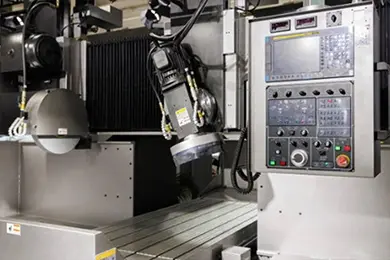
    High-Precision Grinding Machine Group

    High-Precision Grinding Machine Group

    Surface grinders, internal & external cylindrical grinders and jig grinders, enabling precision grinding for multiple application scenarios.
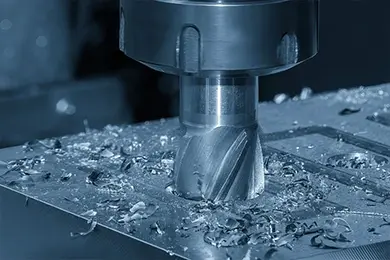
    Precision EDM Equipment

    Precision EDM Equipment

    Sinker EDM and slow-feeding wire EDM, covering machining of complex cavities and contours.
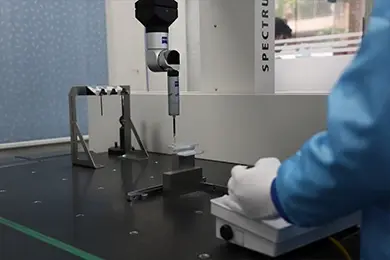
    High-Precision Dedicated Inspection Instruments

    High-Precision Dedicated Inspection Instruments

    Profilometers, roughness testers and micron-grade micrometers for accurate verification of accuracy indicators.

    Quality Control System

    Dedicated quality control nodes tailored for special precision processes, with full-process control over batch stability of micron-level accuracy.

    1

    Process Review & Consumable Selection

    The engineering team conducts pre-assessment of machining difficulty, and selects appropriate grinding wheels, electrode parameters and processing solutions.

    2

    First Article Full Micron-Level Inspection

    After the first article is completed, full inspection covering dimensions, geometric tolerances and roughness is performed. Batch machining will only proceed after the first article passes qualification.

    3

    In-Process Wear Control & Patrol Inspection

    Real-time monitoring of grinding wheel and electrode wear, with regular sampling inspection of key dimensions to ensure batch accuracy consistency.

    4

    Finished Product Final Inspection & Accuracy Report

    Full-dimensional re-inspection is carried out before shipment. A complete accuracy inspection report can be provided to ensure products fully meet drawing requirements.

    Frequently Asked Questions

    Answers to high-frequency questions about grinding and EDM processing, clarifying process applicability and performance limits.

    Q: What are the main functions of precision grinding processing? +
    As a final finishing process, precision grinding greatly improves the dimensional accuracy, geometric tolerance and surface finish of parts. It achieves micron-level tolerances and mirror-grade surface effects, serving as a core process for high-precision parts that require strict assembly and performance standards.
    Q: What scenarios are suitable for EDM processing? +
    EDM is a special non-cutting force machining process. It is ideal for high-hardness materials that cannot be processed by conventional cutting, such as hardened steel and cemented carbide. It also works for structures inaccessible to standard tools, including deep cavities, narrow slits, special-shaped micro holes and complex cavities. The process produces zero machining stress and zero part deformation.
    Q: What is the difference between Wire EDM and Sinker EDM? +
    Wire EDM uses continuous molybdenum wire cutting and is suitable for through holes, planar contours and narrow slits. Sinker EDM adopts custom electrodes for cavity machining, ideal for blind holes, complex curved cavities and special-shaped grooves. The combination of the two covers most EDM machining requirements.
    Q: Can grinding achieve a mirror surface finish? +
    Yes. By adopting the combined process of precision grinding and ultra-precision lapping & polishing, we can achieve a mirror surface finish below Ra 0.2μm, meeting the high surface finish requirements of precision molds, medical parts and optical components.
    Q: Will EDM processing damage the hardness or material properties of parts? +
    No. EDM is a non-contact electrical erosion process with no mechanical cutting force, which avoids material extrusion or stretching and causes no mechanical stress or deformation. By optimizing discharge parameters, we precisely control the discharge layer to effectively prevent edge burning, carbon deposition and material softening, fully preserving the original hardness and mechanical properties of parts.
    Q: What is the highest tolerance accuracy achievable by precision grinding? +
    Conventional precision grinding stably achieves micron-level tolerances of ±0.005mm. With ultra-precision grinding processes and constant-temperature processing environments, it can reach an ultra-high accuracy of ±0.002mm. Geometric tolerances including cylindricity, flatness and parallelism are strictly controlled, making it suitable for high-precision components such as mold inserts, shaft cores, guide pins and optical parts.