
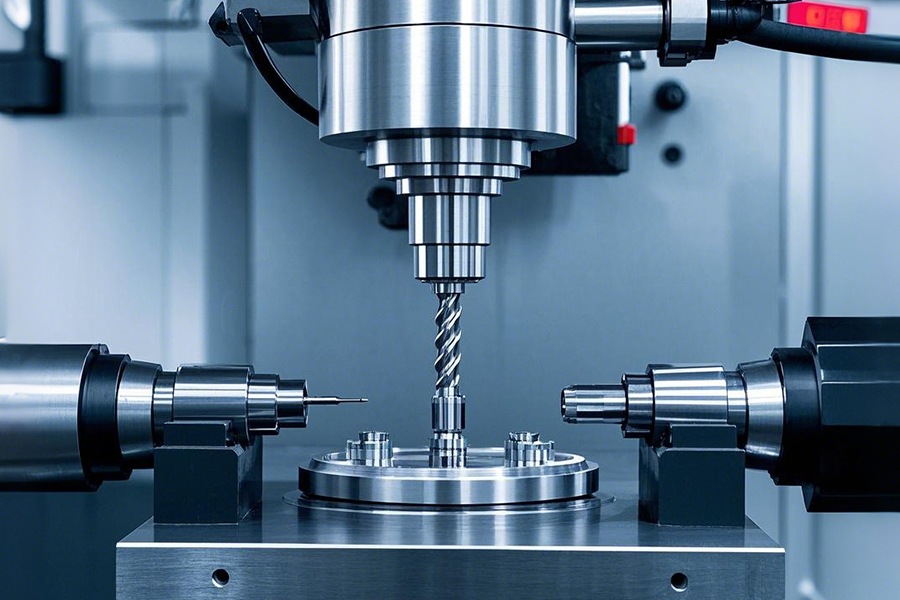


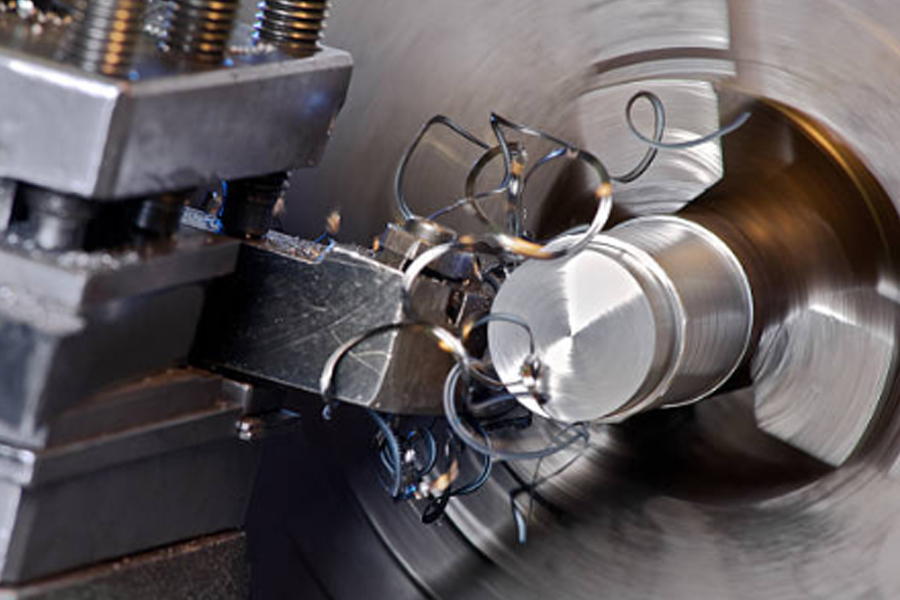
Five-axis CNC machine tools achieve five degrees of freedom in space by adding two rotary axes (such as A and B axes) to the existing three linear axes (X, Y, and Z). This structure allows for machining of the tool or workpiece from almost any direction, completing multi-faceted machining of complex geometries in a single setup, significantly reducing repetitive positioning errors and setup time. Its high-precision CNC system and servo drive technology ensure the accurate execution of complex cutting commands, thereby improving efficiency while guaranteeing excellent dimensional accuracy and surface quality of the workpiece.
Core Advantages of Five-Axis Machine Tools Compared to Traditional Three-Axis Machine Tools
The core advantages of five-axis CNC machine tools lie in their superior flexibility and integrated machining capabilities, specifically:
Complex Surface Machining Capability: They can efficiently and effectively machine parts with complex spatial curved surface features, such as impellers, turbines, and mold cavities—capabilities difficult to achieve with traditional three-axis machine tools.
High Precision and High Consistency: By reducing workpiece transfer and repetitive clamping between different machine tools or processes, they minimize the cumulative errors caused by datum conversion, significantly improving the precision consistency of batch products.
Shortening Process Flow and Improving Efficiency: Multi-face machining in a single setup not only saves setup time but also simplifies process planning and production management, resulting in a shorter overall manufacturing cycle.
Improving Tool Cutting Conditions: By adjusting the relative posture of the tool and workpiece, the tool’s side edges and even bottom edges can be used for cutting, improving cutting efficiency. This also allows for the use of shorter tools, increases system rigidity, and extends tool life.

Key Application Areas: Five-axis linkage technology has become standard in high-end manufacturing:
Aerospace: Used for machining complex structural components such as engine blades, integral bladed disks, and wing frames, meeting their extremely high requirements for material properties, precision, and reliability.
Medical Devices: Suitable for manufacturing products with complex biological surfaces, requiring extremely high surface finish and biocompatibility, such as artificial joints, bone implants, and surgical instruments.
Precision Molds: Used for precision machining of cavities in automotive body panel molds and injection molds, directly achieving excellent surface quality and reducing subsequent polishing work.
Energy and Automotive: Machining key parts such as turbine components, complex hydraulic components, and high-performance engine cylinder heads and gearbox housings.
Process Capabilities and Core Technology Considerations
While five-axis machining offers immense potential, it also places higher demands on processes and technologies:
Machine tool performance is fundamental: The rigidity, dynamic accuracy, center point accuracy of rotary axes (especially for tilting head/rotary table structures), and thermal stability of the machine tool directly determine the final machining accuracy limit.
CNC systems and programming are key: High-performance CNC systems need to possess functions such as complex spatial trajectory interpolation, tool center point control, and dynamic error compensation. Simultaneously, the accuracy and optimization of CAM programming are crucial, requiring effective handling of tool interference, collision detection, and optimal toolpath planning.
Process knowledge is essential: A deep understanding of cutting parameters, tool selection, clamping schemes, and machining strategies is a prerequisite for fully utilizing the capabilities of five-axis machine tools and ensuring stable production.

How to Select a Suitable Five-Axis CNC Machine Tool
Selection should be based on a comprehensive evaluation of actual needs:
Define machining requirements: First, analyze the material, size range, typical geometric features (surface complexity, deep cavities, narrow slits, etc.), and accuracy requirements of the parts to be machined to clarify the core requirements.
Evaluate Machine Tool Structure and Performance:
Structure Type: Select a suitable swivel head, rotary table, or composite structure based on the size and shape of the parts.
Accuracy and Rigidity: Review key indicators such as positioning accuracy and repeatability of the machine tool, and verify through sample cutting.
Travel and Space: Ensure that the machine tool’s table size and travel range meet the needs of future products.
Examine Core Subsystems:
CNC System: Select a mature system that supports advanced five-axis functions and is easy to program.
Servo and Drive: A high-performance drive system is essential for high-speed and high-precision machining.
Emphasis on Technical Support and Service: Prioritize suppliers that provide comprehensive technical training, process support, and reliable after-sales service; this is crucial for the efficient application of five-axis technology.
Conduct Cost-Benefit Analysis: Within the budget, comprehensively consider machine tool performance, production efficiency improvement, quality improvement, and long-term operating costs to select the solution with the highest return on investment.
Five-axis CNC machine tools are core equipment for overcoming the challenges of manufacturing complex parts and moving towards high-end manufacturing. Their value lies not only in the equipment itself but also in the matching process technology, talent system, and project management capabilities. Only by clearly defining needs, carefully selecting components, and building corresponding technological capabilities can enterprises truly unleash the potential of five-axis machining and gain a competitive advantage in the market.